



Update: Insurance Money Can't Buy: Lessons Learned From Aurora Colorado and Connecticut Elementary School Shootings
publication date: Dec 16, 2012
Update: Sadly, the tragic events at Sandy Hook Elementary School in Newtown, CT are another grim reminder of the carnage that can result at the hands of a mentally unstable/evil shooter. There are sensible steps that you can take to protect yourself and loved ones. Institutions including schools can and should implement these steps as well to protect those in their care.
We all have various forms of insurance - health insurance, auto insurance, home insurance, disability insurance, among others. Events like the recent horrific movie theatre shooing in Aurora, Colorado and the September 11 terror attacks cause personal catastrophes which inevitably catch victims off guard.
Of course, you wouldn't want to go through your life not going anywhere or doing anything out of fear of being harmed. While you can't buy insurance to protect yourself in these circumstances against crazed and ruthless attackers, security experts highlight numerous things you can sensibly do to greatly decrease your chances of being harmed.
Advice From a Navy Seal
Brandon Webb, a former Navy Seal, offers the following advice for protecting yourself wherever you go:
- Don't Make Yourself an Easy Target. When at sporting events, concerts, and the movies, choose seats that give you a tactical advantage always. What do I mean? Choose seats that allow good and easy vantage points and a hasty exit point. Always stack the odds in your favor. It's the reason I still combat park (back in to a space) and sit with my back to the wall when I'm eating.
- Active Shooter Scenario Advice. Take cover and not concealment. Concealment hides, cover hides AND protects. It's the difference between hiding behind a movie seat or a concrete wall. Don't lie there with your eyes closed and get shot. Think and move. In these situations you have to take charge and get in the mindset of self-rescue. You cannot wait for first-responders - it takes too long. A good decision executed quickly is better than a great one never executed. Violence of action, as we call it in the Special Ops community, will often change the odds in your favor. For close quarter combat drills we'd draw a gun with someone over 20 feet away running at us. In most cases you can be on someone before they can draw and take a shot. I'm not advocating running straight at someone but if you have the tactical advantage (jam, re-loading, distraction or the shooter isn't paying attention) then take the shooter down or get the hell out of there. Remember that a moving target is extremely hard to hit, even for the well-trained shooter. Deal with the situation with your eyes wide open.
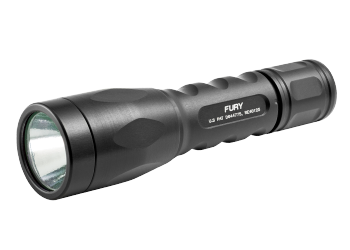
- Flashlight anyone? I have one for daily carry and take it everywhere with me. It's become another extension of me and has diffused at least two potentially violent confrontations in a non-lethal way. I recommend the Surefire P2X Fury Dual Output LED (Photo below; Specs: At least 200+ lumens, waterproof, LED, and a 3-volt lithium battery). How to use it in this situation? I would have pulled my high lumens pocket flashlight and blinded this guy. The high powered beam would have taken away his vision for 3-4 seconds, which is an eternity and enough time to flight or fight. It's the best non-lethal and practical option available, in my opinion. You can take it anywhere - including on an airplane - and if it's a high lumen model it will blind people in broad daylight. I can't recommend this purchase enough.
- Learn From an Expert. There are plenty of former Military and Law Enforcement that have great self-defense skills. Just vet your instructor carefully, ask for references and proof of service. While there are many solid instructors out there, there are also a plethora of wannabe Rex-Kwon-Do types who are self-proclaimed experts and worse - lie about their service.
- Alter Your Lifestyle and it May Save Your Life. Avoid opening night and large crowds (e.g. go to Disney World during off-peak) that make easy targets. FYI, most domestic and foreign terrorists want the biggest bang for their buck. They want Yankee stadium sold out and not Padre stadium at 60% capacity. It sucks to live this way sometimes but ask the survivors from Colorado if it's worth a minor lifestyle change. I say it is, and it's the main reason I'm watching the Olympics on TV and not attending this year. London is too much of a risk for a variety of reasons...
- Don't Be a Victim. Rehearse emergency scenarios before there's an emergency, the time to practice is NOT when it's happening. The world is a dangerous place these days. Be prepared.
In addition to the high powered flashlight recommended by Webb, additional tools that may be of use in protecting yourself include mace and a taser gun (be sure you understand your state's laws).
Advice From a Psychologist and Crime Expert
Dr. Brian Russell is a psychologist who is frequently interviewed on major network's coverage of high profile crime cases. He offers the following advice much of which was prompted by women being harmed by men who they didn't properly check out (although the advice can apply to many types of human relationships):
"...consciously under-estimate your ability to spot a dangerous individual, maintain a healthy suspicion of strangers' motives, particularly in the nightclub/bar environment, and be ever-vigilant when it comes to potential threats to your and your friends' safety. You shouldn't have to do any of those things, but they just might save your life."
"A new Harvard study found that the Internet is not that dangerous a place for kids because relatively very few of the adults who use it are predators. OK, of course the vast majority of adults are not predators. We all knew that. But it does nothing to negate the fact that there are predators out there, and they do use the Internet to meet kids, so parents should be just as vigilant as ever about monitoring what their kids are doing online. Saying it's not that dangerous because most users are harmless is like saying it's not that dangerous for women to go home from bars with men they just met there that night. Yes, more often than not, the men probably wouldn't harm the women, but as we've seen many times...it's very difficult to spot the dangerous ones in advance, so the only solution is to remain on guard - not paranoid, ‘don't-leave-the-house' on-guard, but ‘look-out-for-yourself-and-your-friends' on-guard, where you take time to get to know people in relatively safe environments. Likewise, there's no way to spot those relatively-few predators on the Internet in advance, so parents have to remain on guard - not paranoid, ‘don't-go-near-the-water' on-guard, but sensible, ‘swim-with-a-lifeguard' on-guard, looking out for their kids, making sure their kids aren't swimming in the most shark-infested waters (like adult chat rooms), making sure their kids aren't giving out personal contact information, etc., and teaching their kids to remain on guard as well."
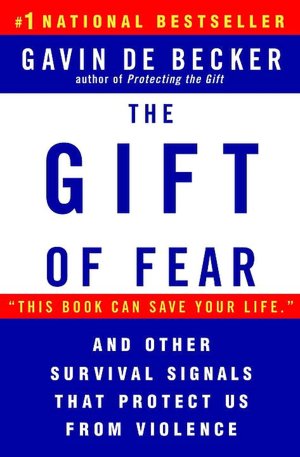
And, finally a book recommendation from Jeff McKissack who teaches profiling and threat assessment to keep folks out of trouble. He recommends Gavin DeBecker's book, The Gift of Fear (Dell) which he calls a "classic in the field." DeBecker is a leading authority on profiling.

Copyright Eric Tyson, 2008 - 2023 all rights reserved.
Eric Tyson is the only best-selling personal finance author who has an extensive background as an hourly-based financial advisor and who does not accept speaking fees, endorsement deals or fees of any type from companies in the financial services industry or product or service providers recommended in his articles, books and his publications.